Skip to tool
ecech.
💬 English Exams & Writing

Topic Sentence Extractor That Shows Your Essay's Skeleton Alone

Strips out every paragraph body and leaves only the opening sentences. If they do not make an argument by themselves, neither does the essay.

Paragraphs

0

Skeleton words

0

Of the whole essay

0%

Structural flags

0

Your essay with the bodies removed

Paragraph shape

Advertisement

How the calculation works

The test you cannot run while looking at the full text The essay You cannot judge the structure here. You already know what you meant. The skeleton Three sentences. Read them in order. Do they argue something on their own? If not, a marker skimming will not find your argument either — it is buried in the supporting detail.

How to Use This Tool

Paste an essay. Everything except the first sentence of each paragraph disappears. Read what is left.

Why removing the text is the point

This is sometimes called a reverse outline: instead of writing a plan and then the essay, you take the finished essay and recover the plan it actually has, which is often not the plan you intended.

You cannot do this by reading your own essay, because you know what each paragraph is for. The supporting sentences fill in the gaps automatically in your head. A marker reading forty scripts does not have that. They skim, and what they skim is roughly the opening of each paragraph.

So the test is simple: do the topic sentences, read in order and by themselves, make an argument? If sentence three does not follow from sentence two, the essay has a structural problem that no amount of tidying inside the paragraphs will fix.

What gets flagged

The tool does not judge whether a topic sentence is good — that needs to understand your argument. It flags things that are countable and that reliably indicate a structural problem:

  • Opening with a bare pronoun. A paragraph starting This is not a straightforward win or They also argue that… depends on the previous paragraph to mean anything. In the skeleton view it is visibly empty, which is exactly how it reads to a skimming marker.
  • Repeated discourse markers. Two paragraphs both opening with However signal two contrasts, and readers expect the second to contrast with the first. Usually it does not.
  • Opening with a statistic. Sixty per cent of respondents said… is evidence, not a claim. Evidence belongs in the body; the opening should say what the evidence is for.
  • Very long openings. Past about 35 words a topic sentence has usually merged the claim with its justification, and the claim stops being visible.
Reads alone 1. Cities are reconsidering street space. 2. The economic argument is contested. 3. Delivery access is a real cost. 4. The direction of travel is settled. An argument, in four lines. Cannot read alone 1. Cities are reconsidering street space. 2. This has been controversial. 3. They also point to the costs. 4. However, it continues. Three of four say nothing on their own.
Same essay length. Only one of these tells a skimming reader what you argued.

A note on the one-sentence assumption

This takes the first sentence of each paragraph as the topic sentence. That is the convention taught for exam and academic writing, and it is what markers are trained to look for, but it is not a law of prose. Narrative and journalistic writing often place the point last. If you write that way deliberately, the skeleton view will look wrong and that is not a fault in your essay.
Advertisement

Frequently Asked Questions

What is a topic sentence?
The sentence that states what a paragraph is going to argue, conventionally placed first. In exam and academic writing it is the sentence a marker reads when skimming, so it carries more weight than its length suggests. Narrative and journalistic writing often put the point at the end instead, which is a legitimate choice this tool cannot detect.
What is a reverse outline?
Taking a finished piece of writing and recovering the plan it actually has, rather than the plan you intended. Extracting the topic sentences is the quickest version. It works because it removes the supporting detail that your own memory fills in automatically when you reread your work.
Why is starting a paragraph with This or They a problem?
Because the opening depends on the previous paragraph to mean anything, so it says nothing to a reader who is skimming paragraph openings. In the skeleton view this is visible immediately — the line is empty of content. The fix is usually to name the thing the pronoun refers to.
Does the tool score my topic sentences?
No, and it says so plainly. Judging whether a sentence is a good topic sentence requires understanding the argument, which requires a language model, which this page does not have. It flags only things that can be counted: bare pronouns, repeated discourse markers, openings that are statistics, and openings over about 35 words.
Why does it read paragraphs as blank-line separated?
Because a single line break inside a textarea is usually soft wrapping rather than a new paragraph. Treating every newline as a paragraph break would make every paragraph statistic wrong. If your text uses single line breaks between paragraphs, add a blank line between them.
Is my essay uploaded anywhere?
No. The extraction runs entirely in your browser. Nothing is sent to a server and nothing is stored.

Related tools in English Exams & Writing

Browse all English Exams & Writing tools
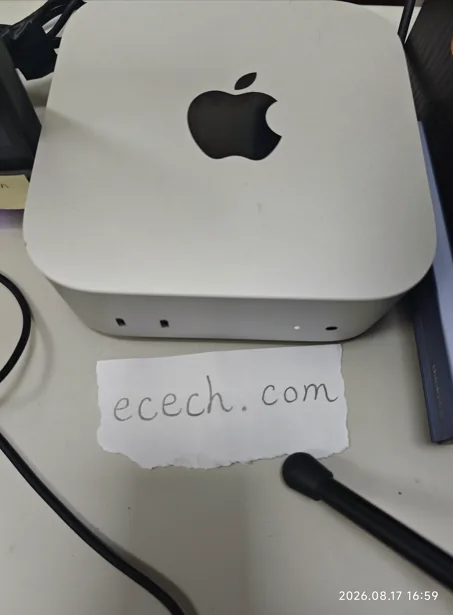
The Mac mini the ecech. site is built on, beside a handwritten note reading ecech.com.

Made by one person

ecech. is not a content farm. Every tool here is written and checked by hand, one at a time, by someone who wanted the tool to exist and could not find a version that showed its working.

No accounts and no sign-in, and nothing you type reaches a server — every calculation on this page runs inside your browser. The ads are served by Google and do set their own cookies, which is set out in full on the privacy page. More about the site.