Skip to tool
ecech.
💬 English Exams & Writing

Reading Speed Calculator That Tells You If You Will Finish the Paper

Time yourself on your own passage, not ours — then see how many seconds per question you have left once the reading is done.

0:00

Your speed

Against 238 wpm average

Reading time for the paper

Left per question

The paper you are timing yourself for

Where the hour goes

Advertisement

How the calculation works

Why “I read at 250 wpm” does not answer the question 250 wpm, reads each passage once read 10 min answering 50 min — 75 s per question 250 wpm, but scans back over each passage read 18 min answering 42 min — 64 s per question Same reading speed. Same paper. Eleven fewer seconds on every question. The number that decides whether you finish is seconds per question, not words per minute.

How to Use This Tool

Paste a passage you actually need to read. Start the timer, read it properly, stop. You get your speed on that text — and then the number that matters, which is how much of the clock is left for the questions.

Why speed alone is the wrong number

Reading speed tools stop at words per minute, which is a fact about you but not an answer to the question you had. In an exam you do not only read. You read, then you hunt for the answer, then you re-read the sentence you half remember. On a typical paper the reading is somewhere between a sixth and a third of the clock, and everything else is the rest.

So this asks for the paper you are preparing for — total passage words, number of questions, minutes allowed — and reports seconds left per question. Two candidates reading at exactly the same speed can end up eleven seconds apart on every question — 75 seconds against 64 — purely because one of them scans back over the passage and the other does not.

That is what the re-reading factor is for. Reading a passage once at your measured speed is the 1.0 case, and almost nobody does that under exam conditions. 1.4 assumes you go back over roughly forty per cent of the words. It is an estimate, not a measurement, and it is labelled as one.

What a normal reading speed actually is

Most sites quote “the average adult reads 200 to 250 words per minute” and cite nothing. The best available figure comes from a 2019 meta-analysis by Marc Brysbaert covering 190 studies, which puts silent reading of English non-fiction at about 238 words per minute, and fiction at about 260.

  • Under about 180 wpm on straightforward prose — slower than typical. On a timed paper this is the main constraint, and it is worth working on before technique.
  • 200–300 wpm — the normal band for adult silent reading.
  • Over about 400 wpm with full comprehension is rare, and above roughly 500 the evidence is that comprehension is being traded away rather than preserved. Claims of 1,000 wpm-plus describe skimming, which is a useful skill but a different one.

A caution worth stating: your speed on a familiar passage is not your speed on an unseen academic text, and the gap is large. Timing yourself on the kind of text you will actually face is the only version of this measurement worth having, which is why the tool has no built-in passage.
Silent reading, English, comprehension intact 100 238 average Brysbaert 2019 400 ~500 comprehension starts being traded away Anything advertised above this range is skimming, which is a different skill.
The widely quoted “200–250 wpm” is roughly right; it just usually has no source attached.
Advertisement

Frequently Asked Questions

What is a good reading speed in words per minute?
About 238 words per minute for silent reading of English non-fiction, according to a 2019 meta-analysis by Marc Brysbaert covering 190 studies. Fiction runs slightly faster at around 260. Anything in the 200 to 300 band is normal adult reading. Above roughly 500 the evidence suggests comprehension is being traded for speed rather than preserved.
Why does this tool not give me a passage to read?
Because your speed on our paragraph would tell you almost nothing about your speed on an exam passage. Dense academic prose reads much more slowly than web copy, and that difference is the entire problem you are trying to solve. Timing yourself on the kind of text you will actually face is the only version of this measurement worth having.
What is the re-reading factor?
An estimate of how much of the passage you cover more than once. Reading straight through at your measured speed is the 1.0 case and almost nobody does that under exam conditions. 1.4 assumes you go back over roughly forty per cent of the words. It is an assumption, not a measurement, which is why you can change it.
Is speed reading at 1000 words per minute real?
Not with full comprehension. Techniques that reach those numbers work by skipping text — which is skimming, a genuinely useful skill for locating information in a passage, but not the same thing as reading it. The research consistently finds comprehension falling once speed rises much beyond 500 words per minute.
Why report seconds per question instead of just my speed?
Because words per minute cannot tell you whether you will finish. In an exam the reading is often only a sixth to a third of the clock and the rest goes on answering. Two candidates with identical reading speeds can be eleven seconds apart on every question purely because of how much they scan back. Seconds per question is the number that decides the outcome.
Does the text I paste go anywhere?
No. The word count and the timer both run in your browser. Nothing is uploaded and nothing is stored.

Related tools in English Exams & Writing

Browse all English Exams & Writing tools
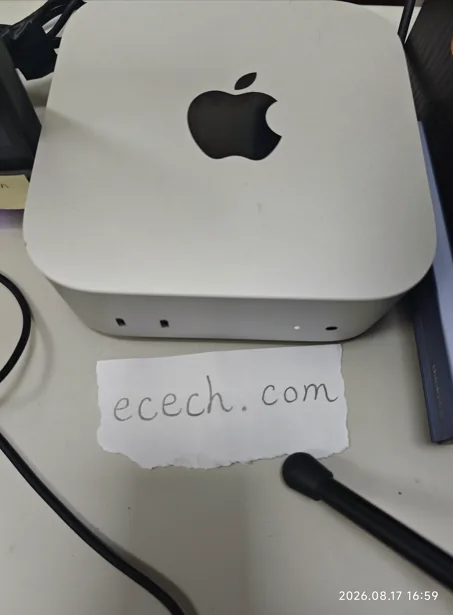
The Mac mini the ecech. site is built on, beside a handwritten note reading ecech.com.

Made by one person

ecech. is not a content farm. Every tool here is written and checked by hand, one at a time, by someone who wanted the tool to exist and could not find a version that showed its working.

No accounts and no sign-in, and nothing you type reaches a server — every calculation on this page runs inside your browser. The ads are served by Google and do set their own cookies, which is set out in full on the privacy page. More about the site.