Skip to tool
ecech.
💬 English Exams & Writing

Free Academic Tone Checker That Does Not Tell You to Delete I Think

Finds the casual words that cost marks in formal writing, with a replacement for each one — and leaves alone the things exam writing is supposed to have.

Words

0

Flagged

0

Per 100 words

0

Heaviest category

What to change, and to what

Your text, marked up

Advertisement

How the calculation works

Two kinds of “informal”, and only one costs marks Actually costs marks found out → discovered a lot of → many / a majority of etc. → name the third example it is obvious that → hedge it stuff, things → name them Leave it alone I think / in my opinion I disagree with this view The Task 2 prompt asks for your opinion. The band descriptors reward a clear position. Deleting it loses you the mark you were told it would gain.

How to Use This Tool

Paste your writing. Every flag comes with a specific replacement, because “make it more formal” is not something you can act on at 3 a.m. the night before an exam.

The advice this tool refuses to give

Search for essay formality advice and you will be told to remove every I. That rule comes from research papers, where the convention is real. It does not transfer to exam writing.

An IELTS Task 2 prompt ends with a question like “To what extent do you agree?” or “What is your opinion?”. The band descriptors for Task Response reward presenting a clear position throughout. A candidate who has been told to strip out every first-person pronoun ends up writing “it could be argued that” four times and never states what they think — which is the exact failure the descriptor is looking for.

So this tool does not flag I think, in my opinion, or I disagree. If you are writing a dissertation rather than an exam essay, that convention does apply, and you should ignore this paragraph.

What it does flag

  • Phrasal verbs with a single-word equivalent. find out, look into, cut back on, get rid of. These are matched as phrases, so look on its own is left alone. Lexical Resource rewards precise vocabulary, and a two-word verb where one exists is the easiest place to lose that mark.
  • Intensifiers and vague quantity. very, really, a lot of, super, way. Usually a sign that the adjective is doing too little work: very big means substantial, and one word beats two.
  • Unhedged absolutes. everyone, always, it is obvious that. Academic register hedges claims it cannot support. This is about accuracy, not politeness.
  • Contractions and filler nouns. don’t, stuff, things, etc. The last one is worth a moment: etc. almost always means the writer wanted a third example and did not have one. An examiner reads it that way too.
Before Researchers found out that a lot of cities have way less congestion. 3 flags — phrasal verb, vague quantity, intensifier After Researchers discovered that many cities have substantially less congestion. Same length. Same claim. Different band for Lexical Resource.
Rewriting for register is substitution, not expansion.

How to read the count

The number that matters is flags per 100 words, not the raw total, because a longer essay will always flag more. Under about 2 per 100 is unremarkable. Above roughly 5 per 100 the register is noticeably conversational and it will be visible to a marker.

These thresholds are a rule of thumb from the density of the flagged categories, not a published standard. No exam board grades register by counting words, and any tool that gives you a “formality score out of 100” has invented that number.
Advertisement

Frequently Asked Questions

Should I avoid I think in an IELTS essay?
No. Task 2 prompts ask directly for your opinion, and the Task Response descriptors reward presenting a clear position throughout the response. The advice to remove all first-person pronouns comes from research-paper convention and does not transfer to exam essays. Candidates who follow it often hedge so heavily that they never state a position, which is the failure the descriptor is designed to catch.
Why are phrasal verbs a problem?
Only when a precise single-word verb exists. Find out, look into and cut back on all have one-word equivalents — discovered, examined, reduced — and Lexical Resource rewards the precise choice. Phrasal verbs with no neat equivalent, like carry out, are fine and this tool leaves them alone.
What is wrong with writing etc.?
It usually means the writer wanted a third example and could not produce one, and a marker reads it that way. It also adds no information: a list ending in etc. tells the reader nothing about what else belongs in it. Naming the third item, or cutting the list to two and moving on, is always stronger.
Is there an official formality score?
No. No exam board grades register by counting words, so any tool reporting a formality score out of 100 has invented that scale. This page reports flags per 100 words, which is just a density, and says plainly that the thresholds are a rule of thumb.
Does this work for university essays and reports?
The phrasal verb, intensifier and hedging checks apply anywhere. The one difference is first person: dissertations and journal articles often do avoid it, and this tool deliberately does not flag it, so you would need to check that yourself.
Is my text uploaded anywhere?
No. The word lists are built into the page and the matching runs in your browser. Nothing is sent to a server or stored.

Related tools in English Exams & Writing

Browse all English Exams & Writing tools
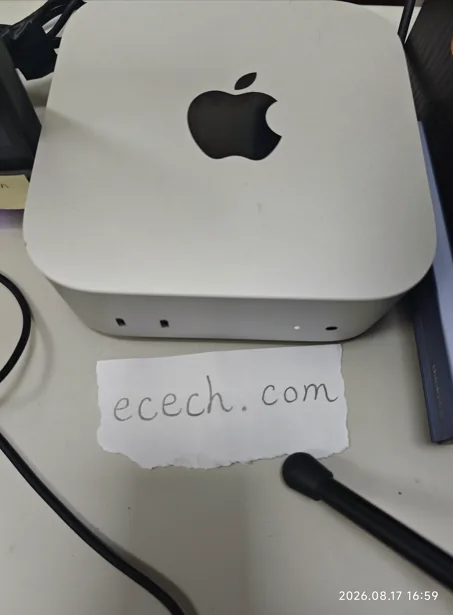
The Mac mini the ecech. site is built on, beside a handwritten note reading ecech.com.

Made by one person

ecech. is not a content farm. Every tool here is written and checked by hand, one at a time, by someone who wanted the tool to exist and could not find a version that showed its working.

No accounts and no sign-in, and nothing you type reaches a server — every calculation on this page runs inside your browser. The ads are served by Google and do set their own cookies, which is set out in full on the privacy page. More about the site.