Skip to tool
ecech.
✏️ Text & SEO Content

Free Case Converter for Title Case, Sentence Case and Code Naming

Nine cases including proper title case that leaves small words alone, plus the four naming styles developers switch between. Converts as you type.

Words

0

Characters

0

Sentences

0

Lines

0

For writing

For code

Advertisement

How the calculation works

"Title case" is not "capitalise every word" Naive The Quick Brown Fox Jumps Over A Lazy Dog And An Old Cat AP style The Quick Brown Fox Jumps Over a Lazy Dog and an Old Cat The rule Articles (a, an, the), short prepositions and conjunctions stay lowercase — unless they are the first or last word, which are always capitalised. AP capitalises anything four letters or longer. Chicago goes by word type instead.

How to Use This Tool

Changing case sounds like something a keyboard shortcut should handle, and for upper and lower it is. The two that actually need a tool are title case, where the rules are genuinely non-obvious, and the code naming conventions, where converting by hand is tedious and error-prone.

Title case, done properly

Most online converters capitalise every word. That is not title case — it is a mistake that makes headlines look like they were written by a machine. Real title case leaves articles, short prepositions and conjunctions in lower case unless they open or close the title.

The two dominant style guides disagree on the details. AP uses a length rule: capitalise anything four letters or longer, so "with" is capitalised and "into" is too. Chicago goes by part of speech: all prepositions stay lowercase regardless of length, so "Between" becomes "between". Both are correct; pick the one your publication uses and be consistent. The third option capitalises everything, which is there because sometimes a client insists.

"user profile image url" in four conventions camelCase userProfileImageUrl JavaScript, Java variables PascalCase UserProfileImageUrl classes, React components snake_case user_profile_image_url Python, Ruby, SQL columns kebab-case user-profile-image-url URLs, CSS classes, filenames
The converter accepts any of these as input too, so you can paste a snake_case column name and get the camelCase property back without retyping it.

The acronym option

Keep ALL-CAPS words as acronyms is on by default and prevents the most annoying failure mode: "the NASA API" becoming "The Nasa Api". A word already written entirely in capitals is treated as an acronym and left alone in title and sentence case. Turn it off if your source text is entirely upper case, in which case every word would qualify and nothing would convert.

Sentence case

Sentence case capitalises the first letter of each sentence and lowercases the rest. It sounds trivial and is not, because it has to find sentence boundaries. Full stops inside abbreviations, decimals and ellipses are all handled, so "costs $1.50 approx. today" does not gain three capitals it should not have.

Code naming

The second block converts to camelCase, PascalCase, snake_case, kebab-case, CONSTANT_CASE and dot.case. Input can be in any of those forms — paste a snake_case database column and get the camelCase property back. This is the tedious half of renaming things across a codebase, and doing it by hand is where typos come from.
Advertisement

Frequently Asked Questions

What is the difference between title case and capitalising every word?
Real title case leaves articles, short prepositions and conjunctions in lower case unless they are the first or last word. Capitalising every word — including 'a', 'and' and 'of' — is a common mistake that makes headlines look machine-generated. This tool applies proper rules by default.
Which title case style should I use, AP or Chicago?
Whichever your publication uses. AP capitalises any word of four letters or more, so 'with' and 'into' are capitalised. Chicago goes by part of speech and keeps all prepositions lowercase regardless of length. Both are correct; consistency matters more than the choice.
Why does it not capitalise my acronym correctly?
It should — words already written entirely in capitals are treated as acronyms and preserved. If yours is being changed, check the acronym option is ticked. If your entire source text is upper case, turn the option off, since every word would otherwise qualify as an acronym and nothing would convert.
What is the difference between camelCase and PascalCase?
Only the first letter. camelCase starts lowercase and is conventional for variables and functions in JavaScript and Java. PascalCase capitalises the first letter too, and is used for classes, types and React components. Mixing them up is harmless in some languages and a compile error in others.
When should I use kebab-case rather than snake_case?
kebab-case with hyphens is standard for URLs, CSS class names and filenames, because hyphens are word separators to search engines while underscores are not. snake_case is standard for Python, Ruby and SQL column names. The rule of thumb: hyphens where humans and crawlers read it, underscores where code does.
Does it handle sentences ending in abbreviations?
Yes. Sentence case detection ignores full stops inside common abbreviations, decimal numbers and ellipses, so 'costs $1.50 approx. today' does not gain capitals it should not have. It is not perfect on unusual abbreviations, so check anything unusual.
Is my text sent anywhere?
No. Every conversion runs in your browser as you type and nothing is transmitted. That matters more than it sounds — case converters are routinely used on unpublished headlines, client copy and database schemas.

Related tools in Text & SEO Content

Browse all Text & SEO Content tools
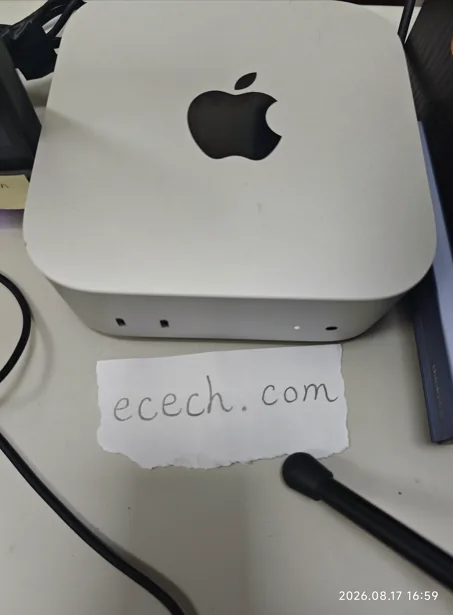
The Mac mini the ecech. site is built on, beside a handwritten note reading ecech.com.

Made by one person

ecech. is not a content farm. Every tool here is written and checked by hand, one at a time, by someone who wanted the tool to exist and could not find a version that showed its working.

No accounts and no sign-in, and nothing you type reaches a server — every calculation on this page runs inside your browser. The ads are served by Google and do set their own cookies, which is set out in full on the privacy page. More about the site.