Gameplay observations come from the supplied footage. Store details and player feedback are identified separately.
Does each obstacle teach a repeatable step, then build toward a more demanding sequence?
A route is a recipe only when its steps are visible
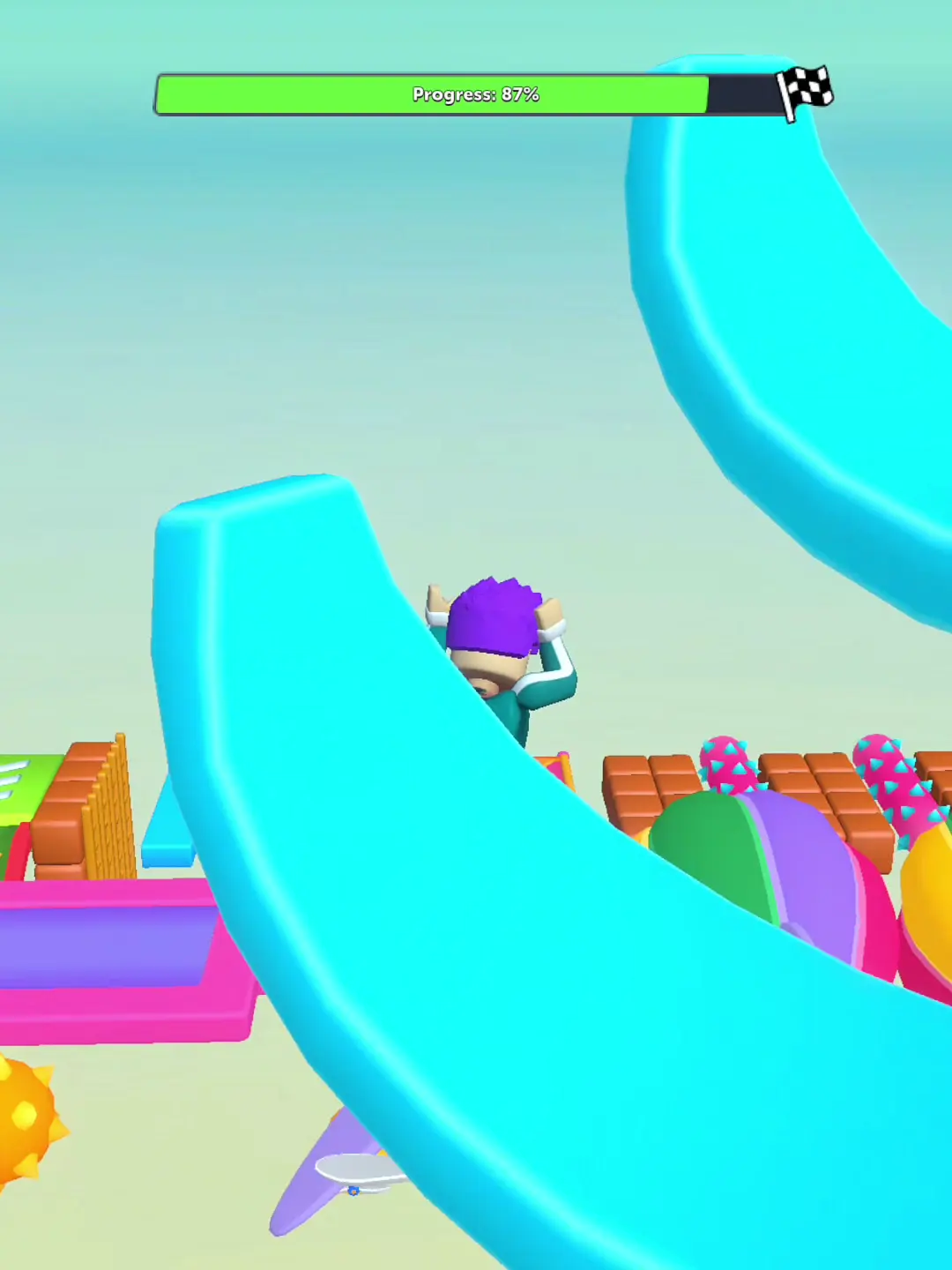
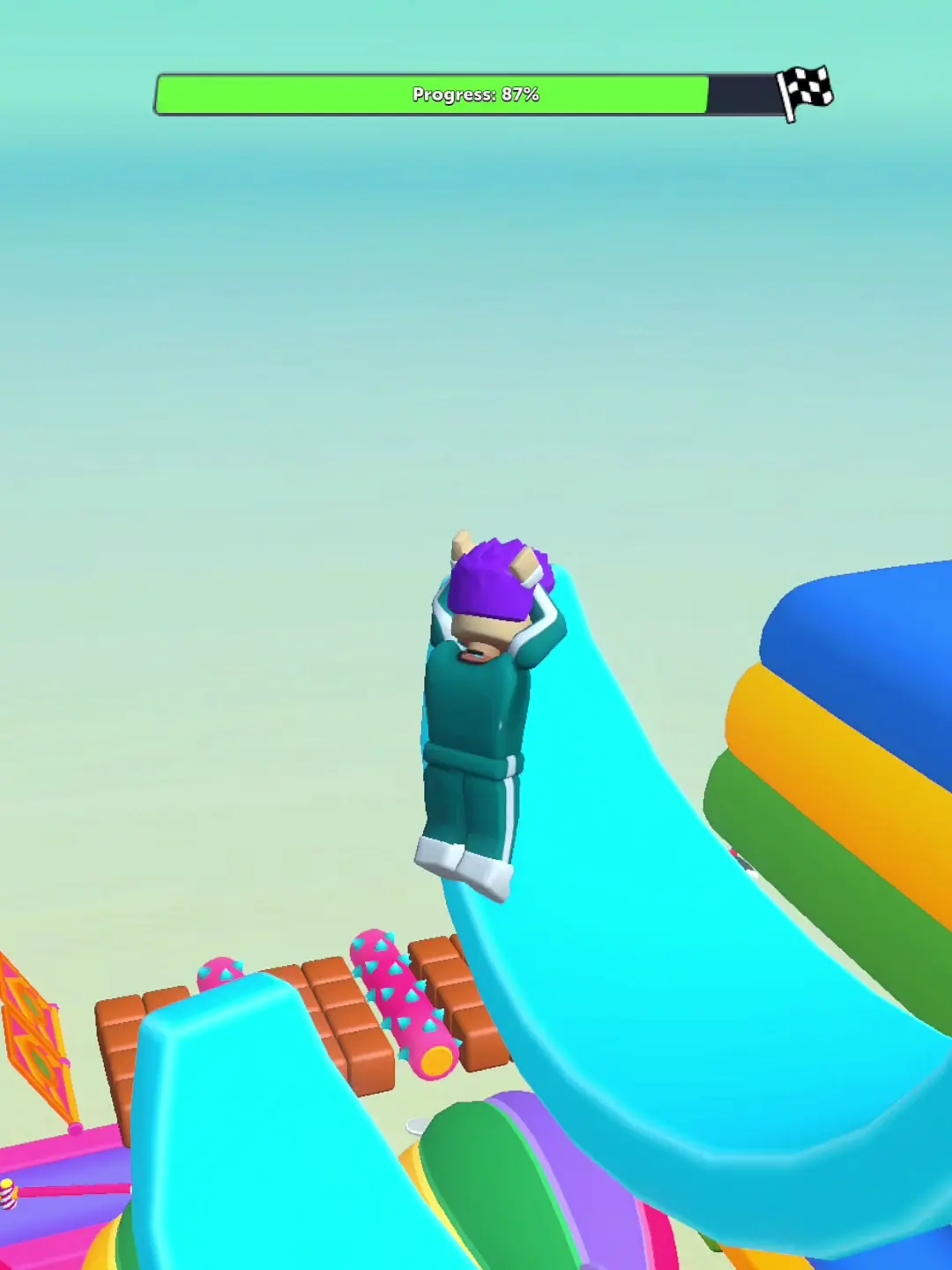
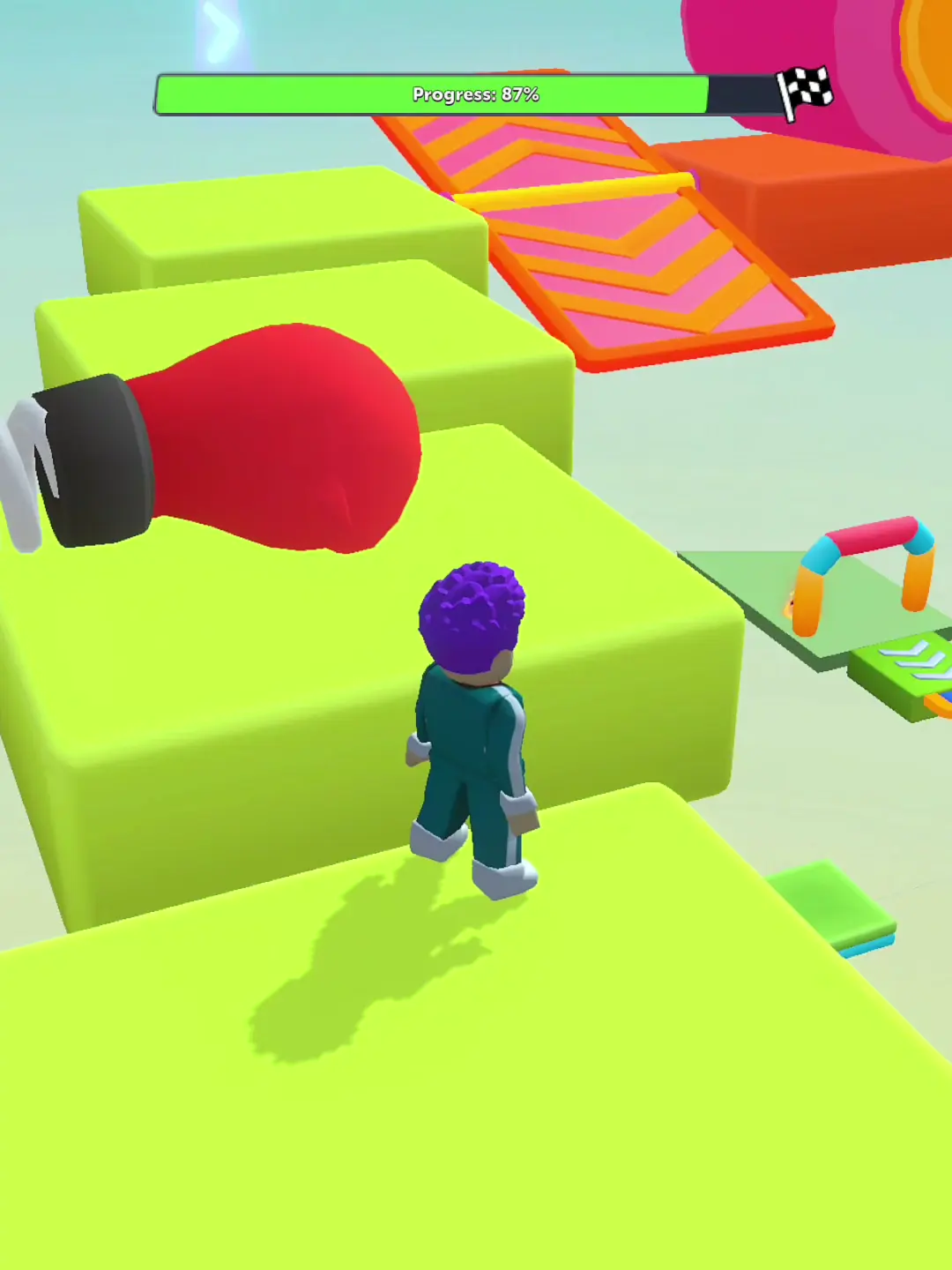
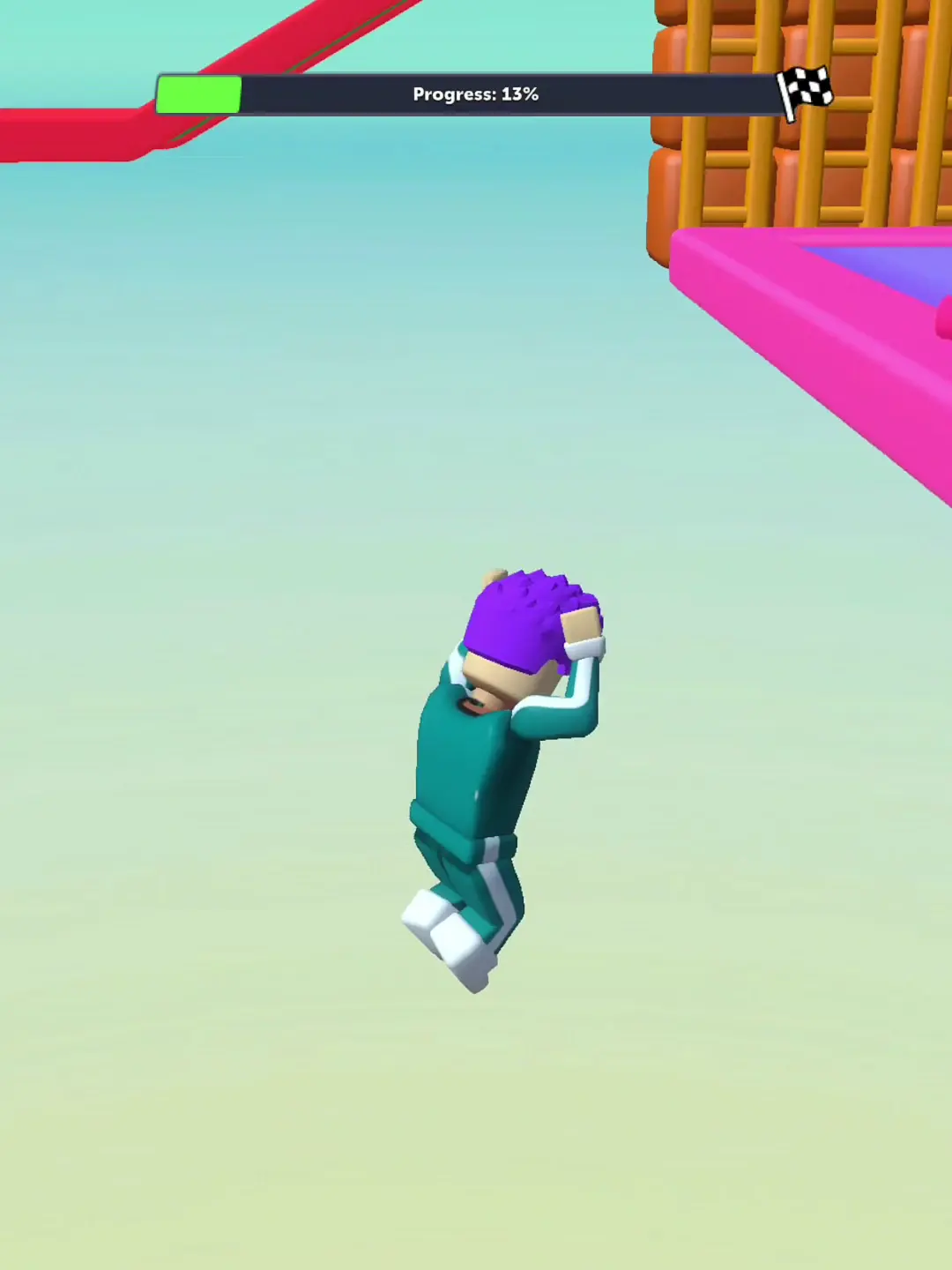
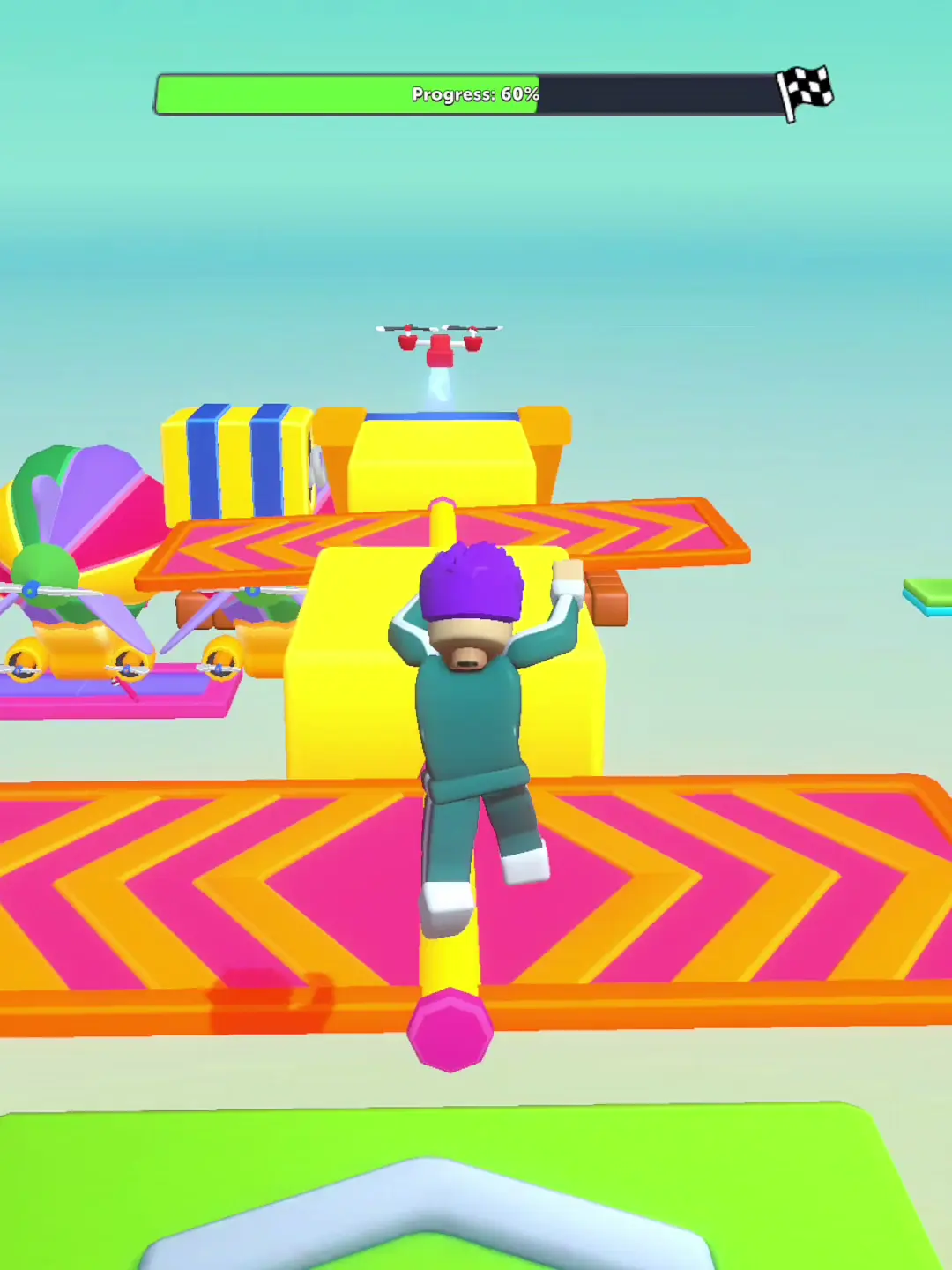
Early footage uses colored hexagonal footholds, then later course sections present curved structures, raised platforms, spring-mounted glove props, arrow-marked pads and chained hazards. This gives the eye a changing sequence of shapes. The progress meter adds a measurable course state. What the clip does not show is a clear recipe for handling each obstacle: there is no visible step-by-step instruction connecting a marker to a jump or a speed value.
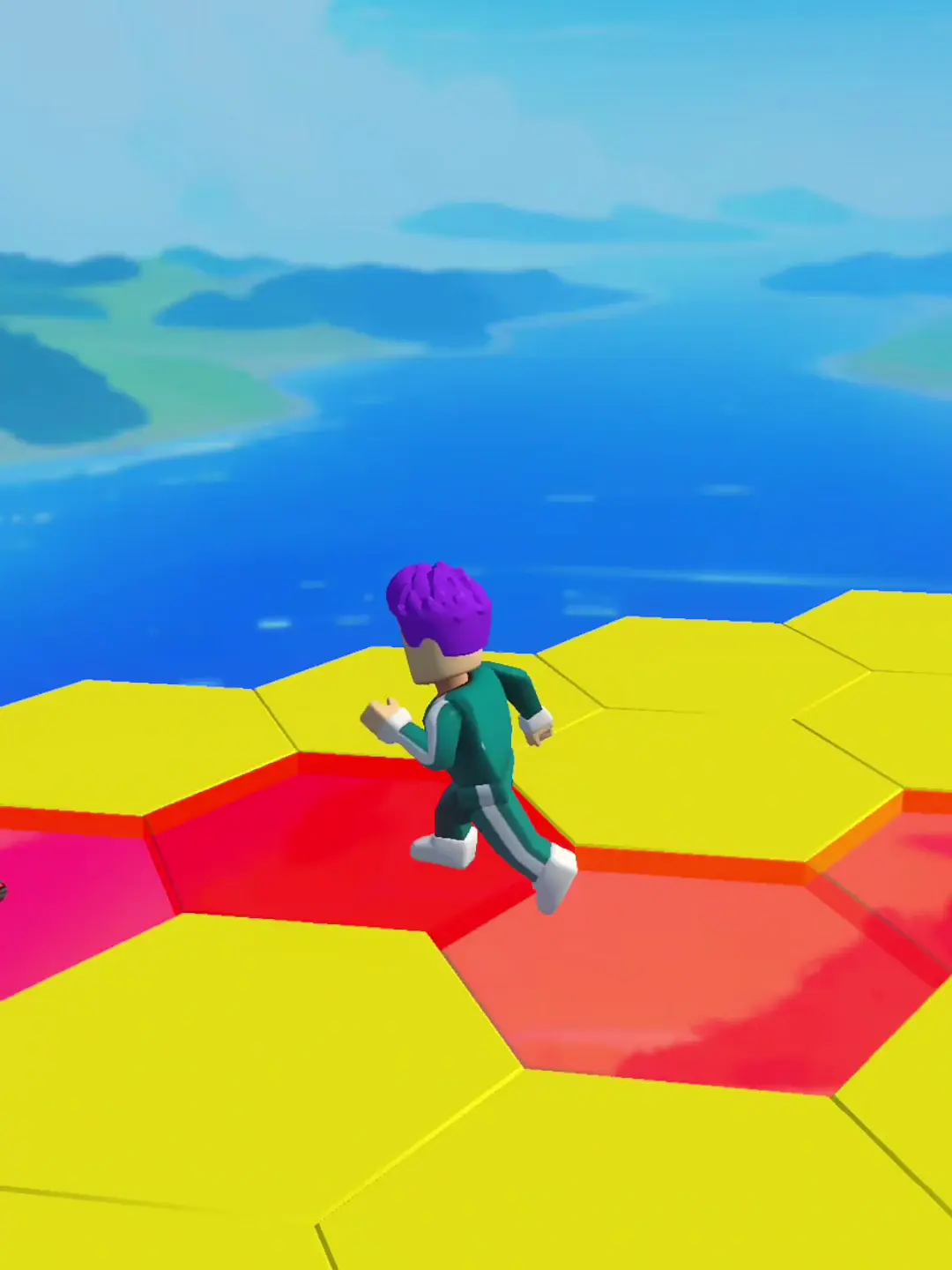
Gameplay footage · 00:43
The difficult ingredient is repeatability
A useful obstacle game lets a player recognize a pattern, attempt it, and understand why the attempt worked or failed. The restart screen proves that a restart state exists; it does not show the preceding collision or explain its cause. Later stills show the avatar near a glove obstacle and moving through other course props, but the exact timing and collision logic cannot be recovered from isolated frames. The footage therefore supports a visual inventory, not a reliable difficulty curve.
Gameplay footage · 02:57
Progress feedback helps; speed feedback is missing
The bar and checkered flag offer an easy-to-read measure of distance through the course. The linked Google Play description says movement builds +1 speed. In the sampled video frames, no legible speed counter is established. Without that number, it is difficult to judge whether faster movement is a meaningful strategy choice or simply a store-page promise.
Gameplay footage · 04:13
Verdict
The course offers varied ingredients and an understandable finish marker. Its instructional recipe is incomplete in this capture: obstacle rules, speed increments, checkpoints, and the reason for failure are not demonstrated. The video also does not clearly match the store’s keyboard theme. A better review sample would show one obstacle slowly, one failed attempt with the cause visible, and a repeat attempt. Until then, a confident overall score would overstate what this footage can show.
Gameplay footage · 05:33
What works
- Distinct obstacle silhouettes suggest varied movement problems.
- The progress meter gives a concrete course marker.
What holds it back
- The footage does not demonstrate repeatable cause and effect for failures.
- The advertised +1 speed loop is not visibly quantified in sampled frames.
A pastry chef's lens: steps, cues, and learning cost
Felix's perspective values clear steps and immediate results, especially after a tiring workday, and may be impatient with slow mastery. The supplied sequence has recognizable pieces of a recipe: a countdown, a route of separated platforms, obstacle silhouettes, a progress indicator, and a finish/reward state. The selected stills cannot show whether a player receives a fair cue or a forgiving landing. The restart dialog around 01:15 establishes that a restart state exists; it does not reveal what triggered it or how much progress was lost. A beginner-facing improvement would be to show a safe example of a jump, then identify the next hazard before the run begins. This recommendation concerns instructional clarity, not a claim that no tutorial exists elsewhere. Felix's budget profile favors predictable value, while the video-marked reward option leaves ad and currency terms unknown; no purchase recommendation follows from this capture.
What the footage cannot show
Sound, touch response, exact obstacle timing, device performance, progression rules and ad frequency remain unverified.
More from the course
Six moments from the supplied footage, selected to illustrate the points discussed above.
What players mention
Three reviews visible on the public Google Play listing showed mixed reactions. This small sample cannot represent the wider player base.
Official Google Play page / download ↗Gameplay videos
Watch the supplied Keyboard Escape playlist.