Gameplay observations come from the supplied footage. Store details and player feedback are identified separately.
Does the footage show a learnable rhythm of approach, jump, landing and recovery?
A movement phrase is visible; its timing is not
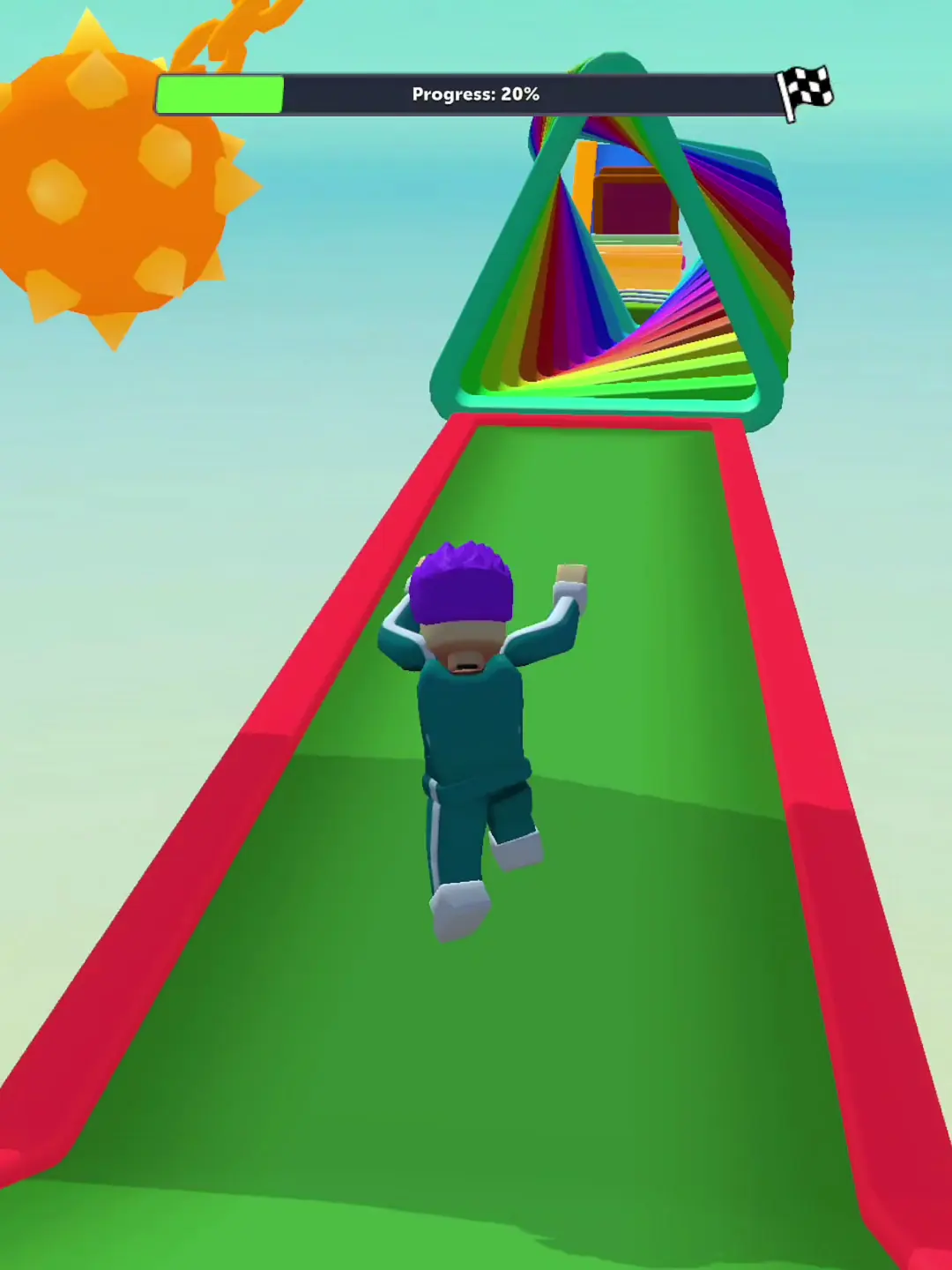
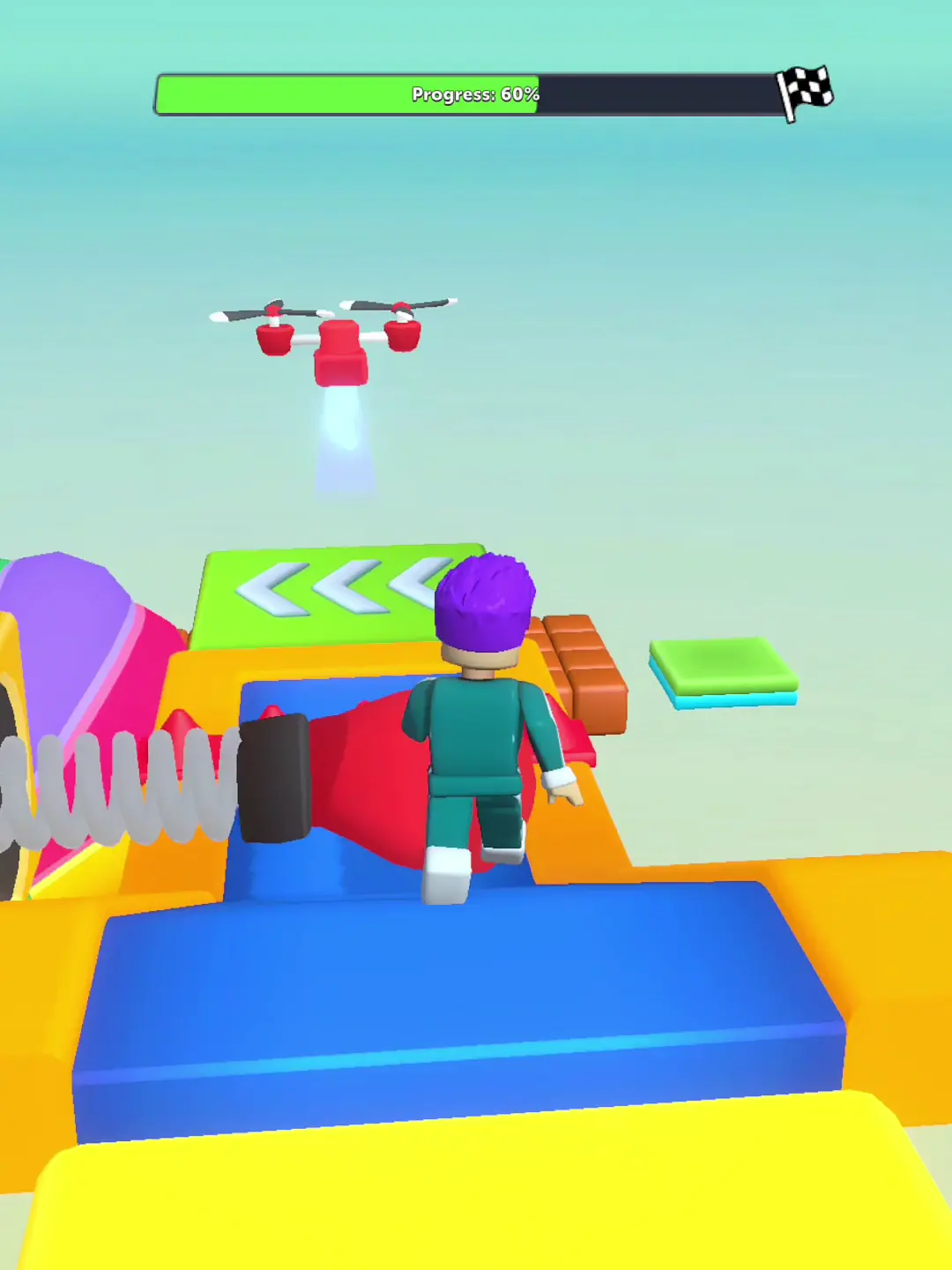
The later course alternates separated platforms, curved structures, spring-mounted glove props, arrow-marked pads and chained hazards. Several frames catch the avatar airborne or approaching a gap. This gives the course a visual rhythm: prepare, cross, land, then read the next shape. The progress bar helps locate the run within that phrase.
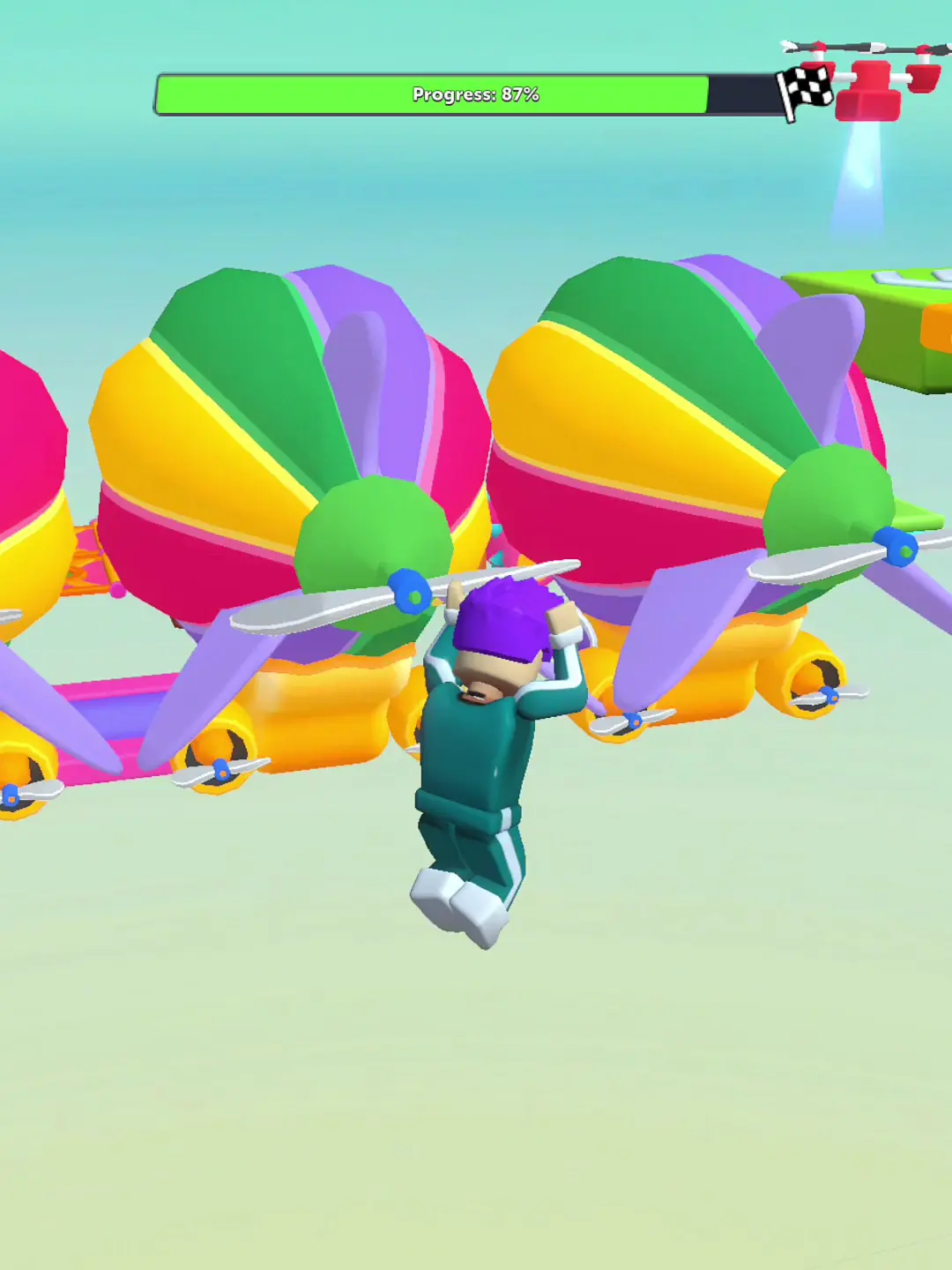
Gameplay footage · 03:03
A still cannot grade the beat
A dance teacher would look for the cue before the jump, the time in the air, the landing window, and the recovery after contact. A one-second frame archive can show poses and spacing, but it cannot measure input latency or whether an obstacle cycles in a fair rhythm. The supplied video has an audio track, but it was not listened to here. No claim is made about keyboard clicks, ASMR timing or music synchronization.
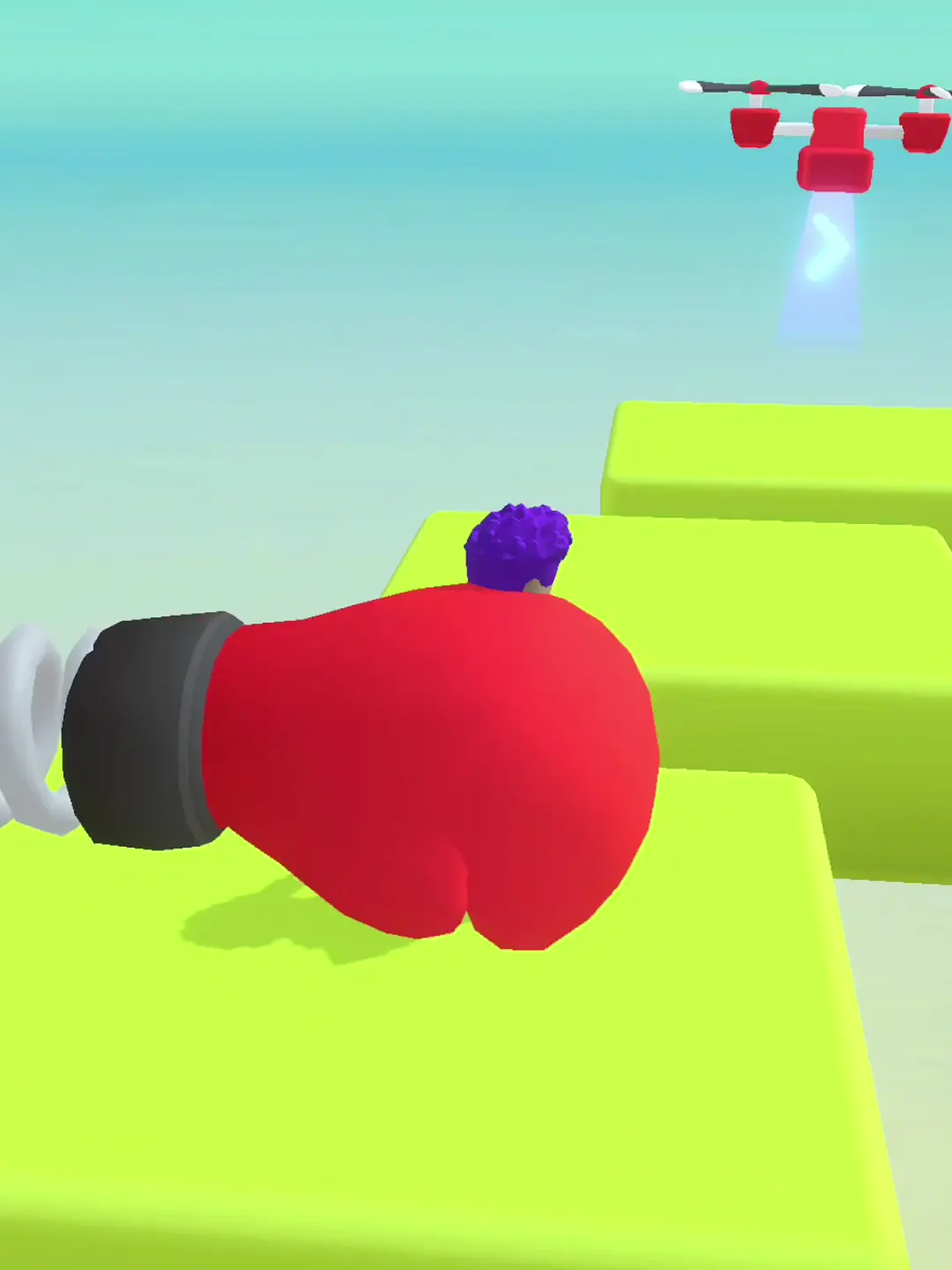
Gameplay footage · 04:19
Speed is a promise that needs a visible measure
The store listing mentions +1 speed, but this review evaluates only what the supplied video visibly demonstrates. The sampled frames show a progress percentage at the top, but no clearly readable speed counter. Without that counter and a continuous sequence, it is not possible to assess how acceleration changes jump timing. This is a central gap for a movement-focused review, not a minor detail.
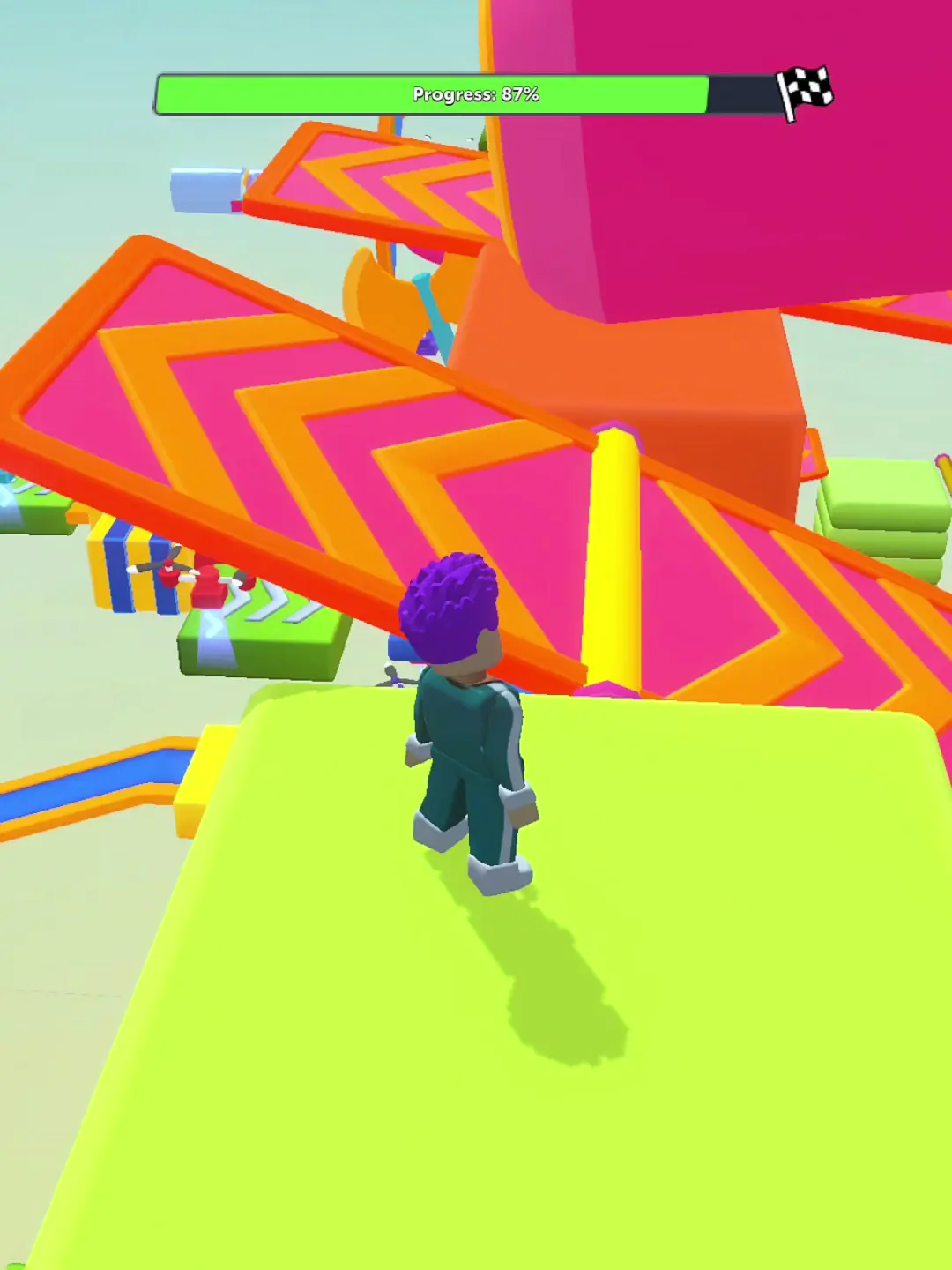
Gameplay footage · 05:39
Verdict
The course silhouettes suggest a series of timing challenges, and the visible finish meter offers a useful outer beat. Whether the controls answer those challenges cleanly remains unknown. A proper follow-up capture should show the same obstacle at normal speed, the input prompt, the landing and the displayed speed value in one continuous segment. A continuous capture of obstacle, input, landing, and displayed speed would help evaluate how progression changes timing.
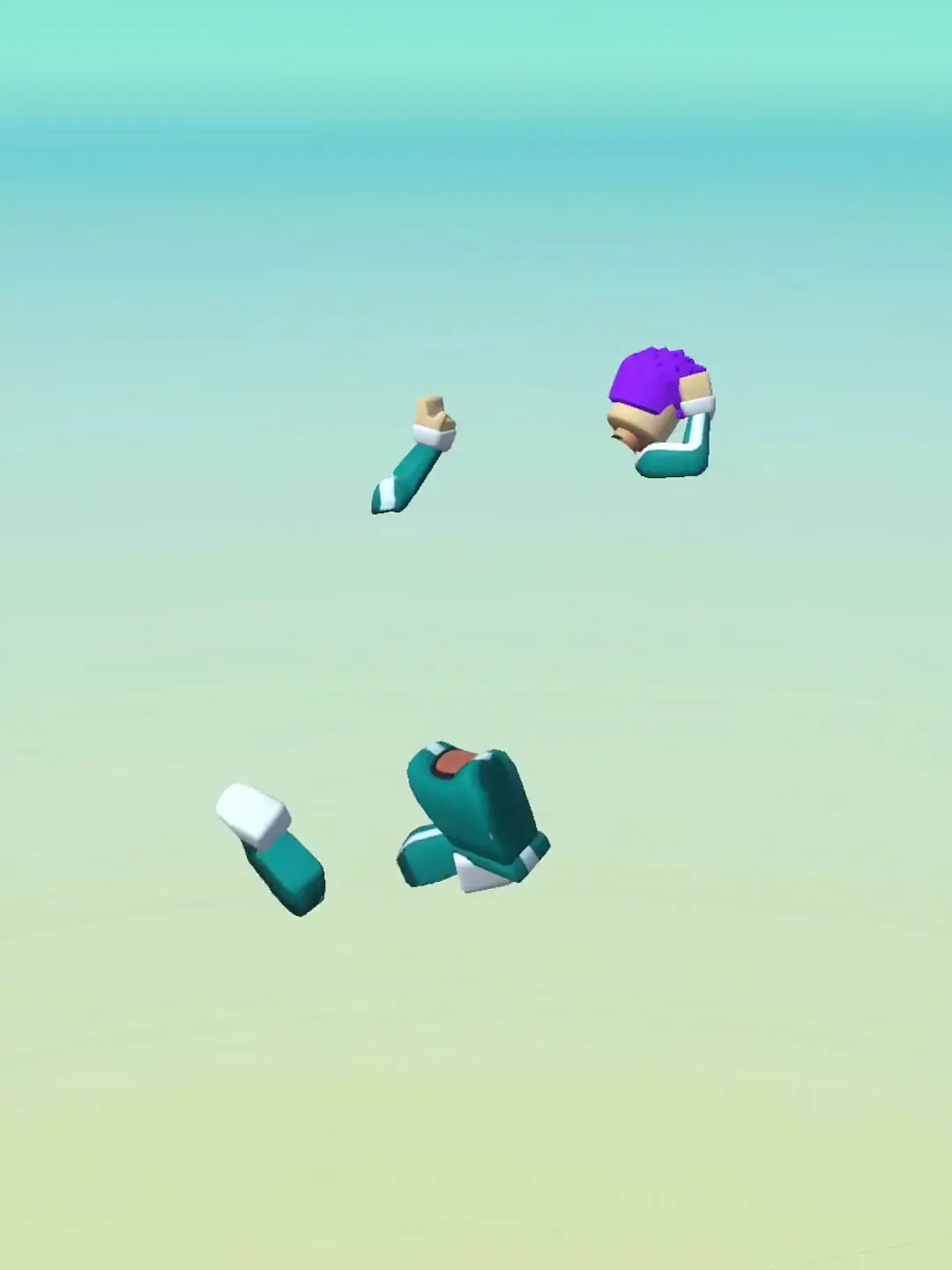
Gameplay footage · 07:24
What works
- Course objects create distinct visual cues for successive movement tasks.
- A finish meter gives an overall sense of run position.
What holds it back
- The recording cannot establish input responsiveness or precise jump windows.
- No legible speed value links the advertised progression to movement.
A dance teacher's lens: movement is not timing
Leo's perspective focuses on cue, movement, timing and a fair difficulty ladder, and may underestimate how unfamiliar controls affect beginners. The selected frames show an avatar on a raised platform facing a glove, airborne over a platform, and moving through a lane. Those poses create a plausible movement phrase - prepare, cross, recover - but they do not measure the time between actions. Because the evidence archive samples about once per second, it can miss the cue, contact, and recovery that determine whether a jump feels rhythmic or arbitrary. The visible progress bar marks overall position, not tempo; no readable speed value in the sampled frames ties the store's +1-speed wording to a measured change. The audio track was not listened to, so rhythm, sound cues and ASMR are outside this verdict. A follow-up capture should show one obstacle at normal speed, its visual cue, input and landing continuously. Leo's movement language is a metaphor for the route's shape, not testimony that he played it.
What the footage cannot show
Sound, touch response, exact obstacle timing, device performance, progression rules and ad frequency remain unverified.
More from the course
Six moments from the supplied footage, selected to illustrate the points discussed above.
What players mention
Three reviews visible on the public Google Play listing showed mixed reactions. This small sample cannot represent the wider player base.
Official Google Play page / download ↗Gameplay videos
Watch the supplied Keyboard Escape playlist.